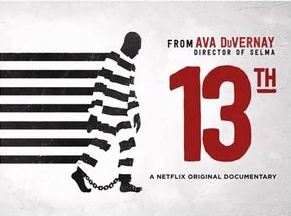
In 13th (DuVernay, 2016), the filmmaker constructs a number of stylistic decisions that enhance the film’s unwavering voice. A participatory documentary, the film focuses on a desperate and deeply rooted need for prison reform. The subjects are interviewed in industrial settings filled with steel, glass, or brick. The use of montage juxtaposes our current administration with footage from the civil rights era and displays how racist institutions have shape-shifted over the course of our nation’s history. The parallels are blatant, and the filmmaker captures them visually through a distinct editing style as well as rhetorically with interwoven arguments and commentary. One of the most important functions to further this dialogue is the editing tactic that transcends the traditional shot reverse shot to transform the narrative’s depth. This recurring transition features interview subjects seated silently, expressions ranging from neutral to skeptical, staring away from or sometimes just past the camera. They stoically await their turn to add their perspective to the rhetoric, exuding the calm certainty that comes with having expert knowledge. In the Norquist and Rangel sequence, the filmmaker grants the two men the unique ability to communicate indirectly, mutual in their conversational power. The filmmaker unifies her subjects to form a richer dialogue that implores the audience to become engaged with seeking truth. This editing style expands the conversational narrative.
A rhetorical argument persists in 13th, a film that balances its facts and figures with poetic grace and relevant media. Experts and activists are interviewed, and a chronological history of the American prison system is established from the beginning. An animated counter periodically tallies up the growing number incarcerated. Its staggering numbers increase, delineating the start of each new political era to indicate a filmic section or topic. After history is reviewed, maddening truths and stories are revealed about the justice system failing and targeting Black people. Footage of gruesome violence is presented that speaks for itself, and some archival materials include graphic images of hangings. The filmmaker exercises an ethical stance in choosing both the photographs and how the materials are handled. In Carnal Thoughts, Vivian Sobchack discusses the ethicality in what Vogel calls a “ferocious reality.” Sobchack states, “In our documentary films, the representation (or, in phenomenological terms, what is perceived as the presentation) of death is even rarer. Indexical in code and function, documentaries tend to observe the social taboos surrounding real death and generally avoid explicit (that is, visible) screen reference to it.” In upholding these ethics, the film effectively commemorates those lost and those still fighting for civil rights.
We do not hear DuVernay’s voice directly, but it comes through to the audience in the words of her subjects. Its audience includes both those aware and those who are not familiar with the long history of mass incarceration. In Grindon’s article, “Poetics of Documentary”, he concludes, “The documentary filmmaker is wise to draw upon the distinctive range of cinematic qualities at work in the interview. The poetic components proposed here remind us that a complex sound and image relationship is an important element in the interview and can be cultivated.” When dissecting a documentary component often taken for granted like the interview, observing how poetics operates is key to understanding the voice of the film. These are the decisions made pertaining to how interviews are to be conducted and reflects the intent and tone of the filmmaker. The filmmaker trusts the expert witnesses it has called forth, and collaboratively stitches historical moments and interviews together in a consistent style.
The filmmaker reiterates stylistic choices in multiple sequences in 13th. Sound bridges are paired with straightforward shots followed by sharp cuts. These cuts lead to follow-up speech. That is, a cut to the next speaker occurs, seated and deadpan, while archival audio or another speaker’s voice lingers over. At 24:34 in the film, Grover Norquist of the American Conservative Union is seated on a long, brown leather couch that divides the screen with a white brick wall above him. He recalls the crack epidemic of the eighties and mentions Rangel as one of the people pushing for harsher sentences for offenders. Norquist’s statement bridges the cut made to Charles Rangel, former Democratic congressman. He is seated in a black leather chair with a solid black backdrop. The backdrop melds into the chair, creating a surreal vacuum behind his glowing light blue suit. He’s framed at the bottom of the screen, hands folded, elbows resting as though he is at an interrogation table. He brings his guarded head up slowly as if to contemplate the end of Norquist’s sentence. In a reaction style cut, Rangel laments on the ineffectiveness of what he thought was the appropriate course of action at the time, essentially responding to what his opponent has declared. These two reciprocate respect; their power is balanced. This is sustained through crafted conversation in which the filmmaker shares a mutual respect with her subjects. The sequence continues as we cut back to Norquist who stumbles on his words while he attempts to defend the Reagan administration’s intentions in the “War on Drugs”. The filmmaker remains neutral as the subject needs no assistance in his own invalidation.
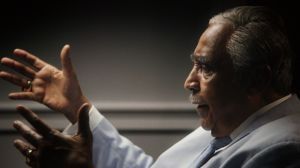
The dialogue between these two separate interviews flows seamlessly despite the reality of their separation. This creative editing decision echoes many times across the film as the narrative is constructed. According to Nichols in Representing Reality, “this form of exchange might also be termed ‘pseudo-dialogue’ since the interview format prohibits full reciprocity or equity between the participants. The interviewer’s skill is often revealed by his or her ability to appear at the service of the interviewee whose speech he or she actually controls, somewhat in the manner of a ventriloquist.”
13th offers no solutions or epiphanies in its conclusion. It sits with its clearly exposed facts and thorough coverage of the past and provokes its audience to contemplate what this means for a country founded on oppressive ideologies and structures. It asks them to fundamentally challenge the systems in place. It compels compassion from them to see a broader picture. The filmmaker’s inventive, consolidated presentation of previously disjointed areas of research functions as a guidebook to mass incarceration in America. By doing so, it directly addresses racial inequality that entangles and suffocates our nation to its roots. 13th debunks the simplistic viewpoints and stereotypes that are typically used in opposition to prison reform. It eloquently summarizes a complicated history and sustains a determined narrative through poetic decisions in editing. Creative construction that drives a conversational style within the film enables its audience to continue that conversation.
Works Cited
Grindon, Leger. “Q & A: Poetics of the Documentary Film Interview.” The Velvet Light Trap, vol. 60, no. 1, 2007, pp. 4–12., doi:10.1353/vlt.2007.0014.
Nichols, Bill. Representing Reality: Issues and Concepts in Documentary. Indiana Univ. Press, 2010.
Sobchack, Vivian. Carnal Thoughts: Embodiment and Moving Image Culture. Univ. of California Press, 2010.
 Cayce "Birdie" Tiedemann
Leave a comment